|
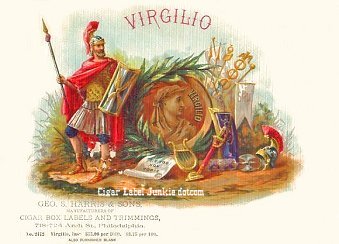
Virgil's poems were pastoral describing the beauty of Italian scenes. His famous poem "Georgics", a more serious work on the art of farming and the charms of country life, established his fame as the foremost poet of his age. The year after the "Georgics" was published; he began his great epic, the "Aeneid". He had devoted more than ten years to this work when, on a visit to Greece, he contracted a fatal fever. On his deathbed he begged to have the "Aeneid" destroyed, saying that it needed three years' work to make it perfect, but Augustus saved for the world one of its epic masterpieces. The poem, published after Virgil's death, exercised a tremendous influence upon Latin and later Christian literature, prose as well as poetry. Dante revered him as his master and represented him as his guide in the `Divine Comedy'. Chaucer, Spenser, Milton, and Tennyson owed much to him. |